The one thing to know:
Tromsø is a lively city in northern Norway, known for its unique Arctic environment, rich history, and vibrant culture.
- 1Tromsø is a major city in northern Norway, located on an island above the Arctic Circle.
- 2It has a long history, from ancient settlements to a hub for Arctic exploration and a modern university city.
- 3Despite its far northern location, Tromsø has a surprisingly mild climate and experiences both midnight sun and polar night.
Tap a part to jump there
Part 1 of 9Think of it like:
Imagine a cozy, bustling town built on an island in the middle of a vast, icy wilderness. That is a bit like Tromsø, a warm and active place surrounded by the stunning, wild nature of the Arctic.

Key idea: Tromsø is a key city in northern Norway, built on an island and connected to surrounding areas by bridges and tunnels.
Tromsø is a city in Norway, located far north in a region called Troms county. It is the main administrative center for both its local area, called Tromsø Municipality, and the larger Troms county. The city itself sits on an island named , which is in a narrow waterway called just off the main part of northern Norway. Parts of the city also extend to the mainland and other islands. For example, the area called Tromsdalen on the mainland is connected to the city center on Tromsøya by a bridge and a tunnel. Another area, Kvaløysletta, on the island of Kvaløya, is linked to the city center by a different bridge.
Key idea: Tromsø is a cultural center with historic architecture and will be recognized as the European Youth Capital in 2026.
The city center of Tromsø is special because it has the largest collection of old wooden houses in northern Norway. Some of these houses date back to 1789. Tromsø is also a cultural hotspot for the region, hosting several festivals, especially during the summer. In 2024, the city has a population of 42,782 people. Looking ahead to 2026, Tromsø will be named the European Youth Capital. This is a big honor, making it the northernmost city ever to receive this title. The year long program will focus on helping young people in the Arctic region and encouraging them to get involved in local government.
“Tromsø is a cultural hub for the region, with several festivals taking place in the summer.”
Quick check
What is unique about Tromsø's city center architecture?
Key idea: The city's name, Tromsø, comes from its island location, with its origins possibly linked to old Norse words for 'island' or 'strong current', and has a distinct Sámi name, Romsa.
The name Tromsø comes from the island of Tromsøya where the city is located. The 'øy' part of the name means 'island' in Norwegian. However, where the 'Troms' part comes from is not completely clear. One idea is that it comes from an old name for the island, 'Trums'. Many islands and rivers in Norway have names like 'Tromsa', which might come from a word meaning 'strong current'.
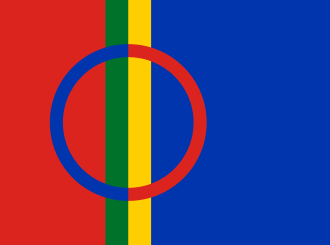
The people, who are the indigenous people of this region, call the island Romsa. It is thought that this name was borrowed from the Norwegian name. A common misunderstanding is that the Sámi name for Tromsø is Romssa with a double 's'. This is actually a different form of the word used when you say things like 'Tromsø Municipality'.
“The city of Tromsø is named after the island of Tromsøya, on which it stands.”
Key idea: Tromsø has a deep history of human settlement, serving as a significant frontier point for both Norse and Sámi cultures.
People have lived in the Tromsø area for a very long time, since the last ice age ended. Archeologists have found tools and remains of buildings in a place called Tønsvika that are estimated to be 9,000 to 10,000 years old.
The area has a rich history of both Norse (early Norwegian) and Sámi cultures. A Norse leader named Ohthere, who lived around 890 AD, described himself as living 'furthest to the North of all Norwegians' in what is now Tromsø. He said that areas north of him were inhabited by Sámi people. An old Icelandic text from the 12th century also suggests that a fjord south of Tromsø was a border between Norse and Sámi coastal settlements. However, archaeological finds show that Vikings were present on Tromsøya itself, with swords, tools, and even a large Viking treasure found there. Both Sámi and Norse settlements existed in many parts of the region.
The first church on Tromsøya island was built in 1252. It was called 'The Church of Saint Mary in Troms near the Heathens', with 'heathens' referring to the Sámi people at the time. This was the northernmost church in the world back then. Around the same time, a small fort was built to protect the area from attacks from the east. Tromsø was not only a Norwegian outpost surrounded by Sámi communities but also a frontier city facing Russia. Over the next 500 years, Norway's border moved further east, and Tromsø became less of a 'frontier town'.
Key idea: Tromsø grew significantly in the 18th and 19th centuries, becoming a city, a center for Arctic trade and hunting, and earning the nickname 'Paris of the North'.
In the 17th century, as Denmark and Norway strengthened their control over the northern coast, a small fort called Skansen was built in Tromsø. Even though only about 80 people lived there, Tromsø was given its official city status in 1794 by King Christian VII. This happened because the city of Bergen lost its special right to control all cod fish trade, which helped Tromsø grow in importance.
The city quickly became a key center. A new church district was created in 1804, and Tromsø became a municipality in 1838. Starting around 1820, Tromsø became the main hub for , replacing Hammerfest. It traded with places in Central Europe and Russia, leading to the creation of a mixed language called .
In 1848, a college for training teachers moved to Tromsø, and it made sure that Sámi students could attend. Later, the Tromsø Museum opened in 1872, and the Mack Brewery started in 1877. During the 19th century, Tromsø earned the nickname 'Paris of the North'. People believe this was because visitors from the south were surprised by how sophisticated and cultured the people in Tromsø seemed.
“In the 19th century, Tromsø became known as the 'Paris of the North'.”
Key idea: In the early 20th century, Tromsø was a base for Arctic exploration and briefly served as Norway's wartime capital, though it escaped direct damage.
By the late 1800s, Tromsø was a major starting point for many . Famous explorers like Roald Amundsen, Umberto Nobile, and Fridtjof Nansen often came to Tromsø to find experienced crew members and learn about Arctic conditions. The Northern Lights observatory was established in 1927.
When Germany invaded Norway in 1940, Tromsø briefly became the seat of the Norwegian government. General Carl Gustav Fleischer made Tromsø a war zone and ordered everyone to prepare for defense. Although the Germans eventually took over all of Norway, Tromsø itself was not damaged during the war. However, a German battleship, the Tirpitz, was sunk by British planes near Tromsøya island in 1944, killing almost 1,000 German sailors.
After the war, Tromsø welcomed thousands of refugees from other parts of northern Norway. These areas had been destroyed by German forces using a 'scorched earth' tactic, burning everything as they retreated.
Key idea: Tromsø experienced rapid growth after World War II, becoming a major educational and research hub in the Arctic.
After World War II, Tromsø grew very quickly. In 1964, several nearby municipalities merged with Tromsø, almost tripling its population from about 12,000 to over 32,000 people. Since then, the population has continued to grow strongly, sometimes adding more than 1,000 new residents each year. Today, the entire Tromsø Municipality has a population of 68,239, and the main urban area has 58,486 people. This number does not even include most students, who often do not change their official address when they move to Tromsø.
Important developments included the opening of in 1964 and the in 1972. At the time, it was one of only four universities in Norway and the only one serving the northern half of the country. The Norwegian Polar Institute, which studies the Arctic and Antarctic, moved to Tromsø from Oslo in 1998. The university has also grown through mergers with other colleges.
Tromsø is the 12th largest municipality in Norway by population. It is home to the world's northernmost university, botanical garden, and planetarium.
Key idea: Tromsø has a surprisingly mild subarctic climate due to ocean influences, experiencing both midnight sun and polar night, with variable snowfall and temperatures.
Tromsø has a , meaning winters are cold enough to qualify, but not extremely harsh, and summers are short. However, its weather patterns are unusual for a subarctic area. It gets a lot of rain and snow in autumn and winter, and it does not have permanently frozen ground (permafrost), which is more typical of places closer to the ocean.
Thanks to the and winds from the west that bring mild air, winter temperatures in Tromsø are surprisingly mild for how far north it is. Summers are usually cool, sometimes cloudy and rainy, but can also be sunny. The weather can change a lot from year to year and even month to month.
The amount of sunshine also varies greatly. For example, July 1980 had a record 430 hours of sun, but July 1989 only had 91 hours. Tromsø experiences the '' from May 19 to July 27, when the sun never sets. It also has a period of continuous darkness called '' from November 28 to January 14. Even during polar night, there is some daylight for a few hours due to twilight, creating a beautiful bluish light.
Tromsø is known for its heavy snowfall, but ice is also common, especially early in winter. Snowfall can be very unpredictable. Sometimes, it rains in the middle of winter during the polar night, melting snow and creating dangerous icy conditions. Many residents use spikes on their shoes, and cars use studded tires. The record for snow depth was 240 centimeters (94.5 inches) in April 1997. Snow can fall almost any time of year except from July to mid September.
The lowest temperature ever recorded in Tromsø was minus 18.4 degrees Celsius (minus 1.1 degrees Fahrenheit) in February 1966. This is very mild for such a northern location, similar to the record cold in Florida, which is much further south. The highest temperature was 30.2 degrees Celsius (86.4 degrees Fahrenheit) in July 1972. Recently, winters have become even milder, with snow melting more often even in midwinter.
Quick check
What is the 'midnight sun' and 'polar night' in Tromsø?
Key idea: Tromsø's cityscape blends historic wooden architecture with modern landmarks, offering cultural sites, museums, and stunning natural views.
Tromsø's city center combines historic wooden houses, some dating back to 1789, with modern buildings. Building wooden houses in the city center was banned after 1904, similar to other Norwegian cities. The oldest house still standing is Skansen, built in 1789 on the site of a 13th century fort.
The shows Tromsø's history as a center for Arctic hunting and expeditions. , built in 1861, is Norway's only wooden cathedral. The , a modern church built in 1965, is a famous landmark on the mainland, known for its unique design. The aquarium and experience center, opened in 1998, offers insights into Arctic life. The Tromsø Museum, part of the university, covers the culture and nature of northern Norway and includes the world's northernmost botanical garden.
For amazing views, you can take a cable car up to Mount Storsteinen, which is 420 meters (1,380 feet) above sea level. The mountain Tromsdalstinden, 1,238 meters (4,062 feet) tall, is another prominent landmark easily seen from the city center. There is also a lake called Prestvannet at the top of Tromsøya island.
Quick check
Name two significant cultural or educational institutions in Tromsø.
Why does this matter?
- Tromsø serves as a crucial gateway to the Arctic, playing a key role in polar research, exploration, and environmental studies that impact our understanding of global climate.
- It is a vibrant cultural and educational center in northern Norway, offering unique experiences like the midnight sun and northern lights, and fostering a diverse community.
- The city's history as a frontier town and its ongoing efforts to support Sámi culture highlight important aspects of indigenous rights and cultural preservation in the modern world.
Ask Baiku
Ask a question and Baiku will answer simply 🙂
⚡ Tap for an instant answer
Test yourself
1 / 10In which country is Tromsø located?
Turn this into a learning journey
Go from this one topic to real understanding of Tromsø: A Northern Gem, a step-by-step path you can track and finish.
Build my journey →Keep exploring
Related topics to keep learning.