The one thing to know:
**Photosynthesis is how plants, algae, and some tiny germs use sunlight, water, and air to make their own food and the oxygen we breathe.**
TL;DR
- 1Plants and some other living things use sunlight, water, and a gas called carbon dioxide to make their own food (sugars) and release oxygen.
- 2This amazing process happens in special tiny parts inside their cells, like chloroplasts in plants, and has two main steps: light-dependent and light-independent reactions.
- 3Photosynthesis is super important because it creates most of the oxygen in our air and provides the energy for almost all life on Earth.
Think of it like:
Think of it like a tiny solar-powered kitchen inside a plant. The sun is the energy source, water and carbon dioxide are the ingredients, and the plant's special parts are the chefs that cook up sugary food for the plant to grow, while also making oxygen as a leftover treat for us!
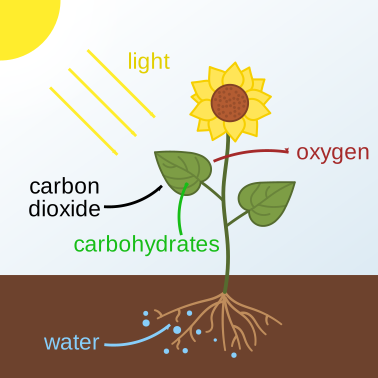
Have you ever wondered how plants grow so big and strong without eating burgers or pizza? Well, they have a super special power called ! It's how plants, algae, and even some tiny germs make their own food using sunlight. They take energy from the sun, mix it with water and a gas from the air called , and poof! They create yummy sugars for themselves and release for us to breathe. Most of the time, when we talk about photosynthesis, we mean the kind that makes oxygen, which is super important for life on Earth.
Not all photosynthesis is exactly the same, though. Some tiny germs do a different kind of photosynthesis that doesn't make oxygen. For example, some bacteria use other stuff instead of water to make their food, and they might release sulfur instead of oxygen. There are even some really old types of tiny life forms that use a simpler way to catch sunlight, like how our eyes see light, to get energy. These different ways show how clever life is at finding ways to use the sun's power!
Even though there are different types, the main idea is always the same: catching light energy. This happens in special spots inside the plant or germ. In plants, these spots are called , which are like tiny green factories inside their leaves. Inside chloroplasts, there are special colorful bits called , like , which is what makes plants look green. These pigments are really good at soaking up sunlight. Once the light energy is caught, it helps to split water, which creates oxygen and other tiny energy packets.
“Plants have a super special power called photosynthesis!”
After the plant has made these energy packets from sunlight and water, it's time for the second step. This step doesn't need light directly, so it's sometimes called the 'light-independent' or 'dark' reaction. In this stage, the plant uses the energy packets it just made, along with carbon dioxide from the air, to build sugary food. This whole process is like a special recipe called the .
The sugars made, like , are the plant's food. They can use these sugars right away for energy, or they can store them up to grow bigger, like making strong stems or crunchy leaves. It's amazing how plants can turn simple things like sunlight, water, and air into all the food they need!
Photosynthesis has been happening for billions of years! The very first living things that did photosynthesis probably used different ingredients than water. But then, tiny germs called came along and started using water, which released lots of oxygen into the air. This was a huge change for Earth, making it possible for animals and other complex life forms, like us, to exist!
Today, photosynthesis is incredibly powerful. All the plants on Earth capture a huge amount of sun energy every year – way more than all the electricity humans use! They also turn billions of tons of carbon dioxide into plant stuff, which is super important for keeping our planet healthy.
“Photosynthesis is super important because it creates most of the oxygen in our air and provides the energy for almost all life on Earth.”
Scientists have been studying photosynthesis for a long time. Back in the 1700s, people started to figure out that plants need light to 'clean' the air. One clever scientist, Jan Ingenhousz, showed that plants only do this in sunlight. Later, it was discovered that plants take in carbon dioxide and give out oxygen, and that water is also a key ingredient.
Over the years, many smart people have added to our understanding. They found out about the two main steps (light-dependent and light-independent) and discovered all the tiny parts and chemicals involved. Thanks to their hard work, we now know a lot about this incredible process that keeps our world alive.
Why does this matter?
- Photosynthesis makes the oxygen you breathe! Without it, there wouldn't be enough oxygen in the air for you and most animals to live.
- It creates almost all the food on Earth. Plants are at the bottom of nearly every food chain, meaning the energy from the sun gets turned into food for them, then for animals that eat plants, and then for animals that eat those animals (like us!).
- It helps control the amount of carbon dioxide in the air. Plants take in carbon dioxide, which is a gas that can trap heat, helping to keep our planet's climate balanced.
Ask Baiku anything about this article
Ask a question and Baiku will answer in plain English 🙂


