The one thing to know:
Pasteurization uses gentle heat to make our food safer and last longer by getting rid of tiny, harmful germs.
TL;DR
- 1Pasteurization is a gentle heating process that kills bad germs in food, like milk and juice, making them safe to eat.
- 2It helps food last longer without spoiling and was named after Louis Pasteur, who discovered it for wine.
- 3Different foods need different heating times and temperatures, but it doesn't change the taste or nutrition much.
Think of it like:
Think of pasteurization like giving your food a warm bath to wash away all the tiny, invisible troublemakers (germs) that could make you sick or make the food go bad too quickly. The bath is just warm enough to clean it up, but not so hot that it changes what the food is like.

Key idea: Pasteurization uses gentle heat to kill harmful germs in food and make it last longer.
Have you ever wondered why milk and juice last a long time in your fridge? It's thanks to something called ! This is a special way to treat food, usually with just a little bit of heat, like less than 100 degrees Celsius (that's not even boiling water!). The main goal is to get rid of tiny, invisible bad guys called (germs that can make you sick) and to help food stay fresh for longer. It either destroys these tiny germs or makes them unable to cause trouble. This process is named after a smart scientist named Louis Pasteur, who figured out in the 1860s that heating wine could stop it from going bad. Today, pasteurization is super important for things like milk and juice to keep us healthy and our food tasty.
Quick check
What is the main goal of pasteurization?
Key idea: The idea of heating food to preserve it has been around for centuries, but Louis Pasteur discovered why it worked.
People have known for a very long time that heating food can help it last. Even way back in China in the year 1117, they were heating wine to keep it from spoiling! Later, in 1768, an Italian scientist named Lazzaro Spallanzani showed that if you boiled meat broth and then sealed it up, it wouldn't go bad. He made it "sterile," meaning totally germ-free. Then, in 1795, a French chef named Nicolas Appert found a way to preserve lots of different foods like soups and jams by putting them in glass jars, sealing them, and boiling them. He even won a big prize for his invention! His method was so good that it led to the idea of food, which is still used today. But it wasn't until Louis Pasteur came along in 1864 that we understood why heating worked. He found that just a little heat, like 50-60 degrees Celsius, could kill the tiny germs in wine without ruining its taste. That's why we call it pasteurization!
Quick check
Who was pasteurization named after?
Milk is a super yummy drink, but it can also be a perfect home for tiny germs to grow if it's not handled carefully. These germs can make people very sick. For example, between 1912 and 1937, about 65,000 people in England and Wales died from a sickness called just from drinking raw (unpasteurized) milk! The Centers for Disease Control and Prevention (CDC) says that raw milk causes many more hospital visits than other food-borne diseases. Pasteurization helps stop diseases like tuberculosis, , and from spreading. Because of pasteurization, milk is now much safer to drink. In the early 1900s, scientists like Milton Joseph Rosenau helped set the rules for how milk should be pasteurized, like heating it to 60 degrees Celsius for 20 minutes. Now, most milk you buy has been pasteurized to keep you safe and healthy.
Dairy-Related Disease Outbreaks (1998-2011) in the US
“The Centers for Disease Control and Prevention (CDC) says that raw milk causes many more hospital visits than other food-borne diseases.”
Quick check
Why is pasteurization especially important for milk?
Key idea: Pasteurization uses different heat levels and times depending on the food to kill germs and extend shelf life.
So, how does pasteurization actually work? It's a gentle heating process for liquid foods, whether they are already in a package or not. The food is heated to a temperature below boiling, usually less than 100 degrees Celsius. The exact temperature and how long it's heated depend on the food. For example, is usually a bit sour (we call this "acidic"), so the heat treatment mostly stops enzymes that make it spoil and kills yeast. But for foods like milk or liquid eggs, which are not as sour, the heat needs to be strong enough to kill the really bad germs that can make us sick. One common way to pasteurize milk is called (High-Temperature Short-Time). This means heating milk to about 71.5 degrees Celsius for just 15 seconds. This makes the milk safe and helps it last for about two to three weeks in the fridge. There's also (Ultra-High-Temperature) where milk is heated even hotter, to 135 degrees Celsius for only 1-2 seconds! This kind of milk can last for months without even being in the fridge!
Key idea: Special machines like heat exchangers are used to carefully heat and cool food during pasteurization.
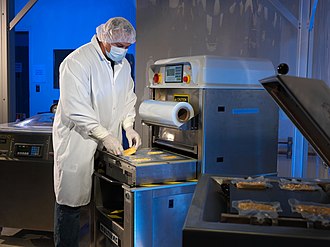
To make sure pasteurization works perfectly, special machines are used. Sometimes, food is heated before it goes into its package. Other times, it's heated after it's already in the container. For liquids like milk or juice, they often flow through a special machine called a . Imagine it like a maze of thin metal plates or tubes. The food flows on one side, and hot water or steam flows on the other, heating the food up. After heating, the food stays in a "hold tube" for just the right amount of time to kill the germs, and then it's cooled down quickly. If for any reason the food isn't heated enough, a smart valve sends it back to be re-heated, making sure only perfectly pasteurized food gets packaged. This makes sure every drop of food is treated correctly.
Key idea: Scientists check for special natural helpers, like alkaline phosphatase in milk, to confirm pasteurization worked.
How do we know if pasteurization really worked? It's hard to quickly check for every single germ. So, scientists look for something else. In milk, they check for a natural helper called . This helper is always in raw milk, but the heat of pasteurization destroys it. So, if they can't find alkaline phosphatase in the milk, it means the milk was heated enough to kill the bad germs too! This is a much faster way to check. For other foods, like liquid eggs, they check for a different helper called alpha-amylase. This helps make sure our food is safe to eat.
Pasteurization is really good at getting rid of almost all harmful germs. For example, heating milk to 72 degrees Celsius for 15 seconds can reduce millions of bad germs like Salmonella or E. coli to almost none! This is called a "log reduction." If something has a 6 log reduction, it means that out of 1,000,000 germs, only 1 would survive. Pasteurization makes sure that almost no bad germs are left. This is why it's so important for keeping us healthy. Modern pasteurization machines are designed very carefully to make sure every single bit of food gets heated evenly and for the right amount of time.
Germ Reduction by Pasteurization (15 seconds)
“Pasteurization makes sure that almost no bad germs are left. This is why it's so important for keeping us healthy.”
Key idea: Pasteurization is gentle enough that it doesn't significantly change the taste or nutritional value of most foods.
Even though pasteurization uses heat, it's usually a very gentle process. This means it doesn't change the taste or the healthy stuff (like ) in your food very much. For example, in milk, pasteurization might slightly change some vitamins, but milk isn't our main source for those vitamins anyway. Sometimes, pasteurization can make fruit juice lose a tiny bit of its smell, but clever ways are used to stop this. The color of foods usually isn't changed much either. So, you get safe food that tastes almost exactly the same and is still full of good things for you!
Why does this matter?
- It keeps you safe from getting sick from harmful germs that can be in your food and drinks.
- It helps food like milk and juice stay fresh for a longer time, so less food goes to waste.
- It allows us to enjoy a wider variety of foods and drinks without worrying about hidden dangers.
Ask Baiku anything about this article
Ask a question and Baiku will answer in plain English 🙂