The one thing to know:
One Laptop per Child tried to give every child in the world a special, affordable laptop to help them learn and grow.
TL;DR
- 1The One Laptop per Child (OLPC) project aimed to give affordable laptops to children in developing countries for education.
- 2They created a special, tough, and low-power laptop called the XO, but faced challenges with cost, distribution, and actual learning impact.
- 3Even though it ended in 2014, OLPC inspired new ideas for cheap laptops and showed how important computer skills are for everyone.
Think of it like:
Think of it like trying to give every kid in the world a special, super-cool coloring book and crayons, but then realizing some kids need a desk to color on, or someone to teach them how to hold the crayon first, and the crayons are a bit more expensive than you thought!
Imagine a world where every child, no matter where they live, has their very own computer to learn and explore! That was the big dream behind a special project called (OLPC). From 2005 to 2014, a group worked hard to make and give out special computers to kids in places where they didn't have many learning tools. They also wanted to create fun learning games and programs for these computers.
Back then, regular laptops cost a lot of money, usually more than $1,000! So, the OLPC team had to invent a super-cheap computer. They came up with the , which was not only affordable but also used very little power. Many big companies like Google and AMD helped pay for this project. The project was praised for making laptops that were cheap and didn't use much power. It also helped countries realize that learning about computers is super important for kids. However, after some time, the part of the group that made the laptops stopped in 2014 because they didn't sell as many as they hoped. The original OLPC group still exists, but they don't make laptops anymore.
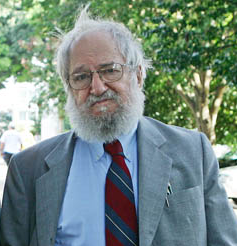
The idea for OLPC came from a smart teacher named . He believed that if kids got computers when they were young, they would become really good at using them. He compared keeping computers in a special lab to libraries chaining books to walls — it just didn't make sense! Another person, , thought sharing computers was like sharing pencils, which isn't ideal for learning.
In 2005, Nicholas Negroponte went to a big meeting and told everyone about his dream: a laptop that cost only $100! He wanted this laptop to change how kids learned everywhere. Even though some people like Bill Gates weren't sure it was possible, many companies were excited to help. Nicholas Negroponte realized that making the screen cheaper was key to making the whole laptop affordable. He met a super-smart screen inventor, Mary Lou Jepsen, and together they started the "Hundred Dollar Laptop Corp."
“He believed that if kids got computers when they were young, they would become really good at using them.”
The OLPC project got a lot of good attention. In 2006, the creator of Wikipedia, Jimmy Wales, announced that Wikipedia would be on the laptops! He wanted kids in places like Africa to have free access to knowledge to help them escape poverty. The United Nations also said they would support the project, helping to get laptops to schools in countries that needed them most.
Later, OLPC even had a special program called "" (G1G1). If you bought one laptop for yourself, they would send another one to a child in a developing country. Many people loved this idea and participated, but it also had some problems with getting the laptops delivered.
Even with all the excitement, the OLPC project faced some tough questions. Some people worried that the project focused too much on America and didn't really understand the problems in other countries. They said things like clean water and better schools were more important than laptops.
There were also worries about how much the laptops really cost. Even though they aimed for $100, the price often stayed above $200. For families earning very little money, this was still a huge amount. Some people also said that just giving a laptop wasn't enough; teachers needed training, and the laptops needed to be fixed when they broke. Studies in places like Peru found that while kids liked the laptops, they didn't always help them do better in school.
Some critics even said that OLPC just dropped off laptops and left, without making sure they were used well. They called this a "drive-by" approach. Nicholas Negroponte, however, thought that kids could learn a lot on their own with a connected laptop.
“Some people also said that just giving a laptop wasn't enough; teachers needed training, and the laptops needed to be fixed when they broke.”
The special laptop, called the , was designed to be super tough and use very little power. It didn't have a regular hard drive like many computers; instead, it used , which is like the memory in your phone. It also had a special way for laptops to connect to each other and share internet, even without a regular Wi-Fi network. This was called .
Over the years, they made different versions of the XO Laptop, trying to make them even better and cheaper. They even thought about making a tablet version! The goal was always to keep the price low, aiming for under $100, and to make them last a long time.
The laptops came with special software. They had a system to stop them from being stolen, which meant they had to check in with a server sometimes. If they didn't check in, they would lock up. This was meant to prevent theft but sometimes caused problems for users.
There was also a big discussion about whether the laptops should use only free, open-source software (like Linux) or also include Windows. Nicholas Negroponte eventually said that the main goal was for kids to learn, and if Windows helped more kids get laptops, then it was worth considering. However, not many countries chose to use Windows on their OLPC laptops.
Some problems came up with the laptops. Teachers in Peru found that if there was a software problem, they were told to "flash" the computer (which means resetting it), and if it was a hardware problem, they just reported it. This made people feel confused and disconnected from their laptops, and many ended up not being used.
Things like broken screens were expensive to fix. The special security system sometimes locked laptops by mistake. Also, the learning software, called Sugar, was hard for teachers to learn, and the special network feature didn't work very well. The laptops also couldn't connect to big screens for presentations, making it hard for kids to show their work to the whole class.
Despite the challenges, OLPC did manage to send out over 3 million laptops around the world! Countries like Uruguay were very excited about the project. Uruguay was the first country to buy a lot of laptops, giving one to every primary school child. This project, called Plan Ceibal, cost about $260 per child, including all the support and internet.
However, a study in Uruguay later found that while kids liked the laptops, they didn't really help them do better in reading or math. Most kids used them for fun, not for schoolwork. Still, other studies have said the project was a success. The OLPC project shows how exciting and challenging it can be to bring new technology to help children learn everywhere.
Why does this matter?
- It shows how technology can try to help kids learn, no matter where they live, giving them tools they might not otherwise have.
- It highlights that just giving someone a computer isn't always enough; things like teacher training, internet, and fixing broken parts are super important too.
- It inspired many other projects and ideas for making affordable computers, like Chromebooks, which many schools use today.
Ask Baiku anything about this article
Ask a question and Baiku will answer in plain English 🙂
Test yourself
1 / 3What was the main goal of the One Laptop per Child (OLPC) project?
Keep exploring

Educational technology
Use of technology in education to enhance learning and teaching
Digital divide
Inequality of access to information and communication technologies

Computer literacy
Skill in using computers and digital technology
Constructionism (learning theory)
Learning theory involving the construction of mental models