The one thing to know:
The Moon is Earth's only natural buddy in space, always orbiting us and lighting up our night sky.
TL;DR
- 1The Moon is Earth's only natural satellite, meaning it's our planet's space companion.
- 2It causes Earth's ocean tides and always shows us the same face because of a special dance with Earth.
- 3Humans have visited the Moon, and scientists are planning to go back to explore it more, especially for water.
Think of it like:
Think of the Moon like a loyal dog walking around its owner (Earth). No matter where the owner goes, the dog always stays close and keeps the same side facing them.

The is like Earth's best space friend! It's the only natural satellite that goes around our planet. It's pretty far away, about 384,399 kilometers (that's like driving around Earth 30 times!). It takes about 29.5 days for the Moon to go all the way around Earth and show us all its different phases, like when it's a tiny sliver or a big, bright circle. This is called a .
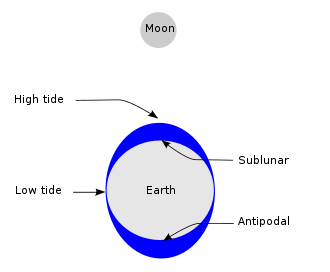
The Moon and Earth are connected by an invisible pull called . This pull is super important! It causes the ocean tides on Earth, making the water go up and down. Because of this strong pull, the Moon always shows us the same side. It's like it's stuck looking at us! This is called . Even though it always shows us the same face, the 'far side' isn't always dark; it gets sunlight just like the side we see.
The Moon is much smaller than Earth, about one-quarter of our planet's size. Imagine it's about as wide as the whole United States! Its gravity is also much weaker; if you were on the Moon, you'd feel about one-sixth of Earth's gravity, so you could jump really high! The Moon's surface is covered in a dusty layer called and has lots of big holes called from space rocks hitting it a long, long time ago. Some of these craters were filled with hot, gooey lava that cooled down and made the dark, flat areas we see, which are called 'maria' (which means 'seas' in Latin, but they're not actually water!).
“The Moon always shows us the same side. It's like it's stuck looking at us!”
Scientists think the Moon was made a very, very long time ago, about 4.5 billion years ago! The most popular idea is that a huge rock, about the size of Mars, crashed into Earth. This crash sent a lot of Earth's material flying into space, and over time, all that stuff came together to form our Moon. It's a pretty wild story!
When the Moon passes through Earth's shadow, we see a , where the Moon can look reddish. And sometimes, the Moon can even block out the Sun completely, causing a ! This happens because, even though the Sun is much bigger, it's also much farther away, so they look about the same size in our sky.
People have been looking at the Moon for thousands of years. Ancient people used it to tell time and created stories and myths about it. The first time humans sent something to the Moon was in 1959, and the first people to actually walk on the Moon were Neil Armstrong and Buzz Aldrin in 1969, during the Apollo 11 mission! They brought back rocks and dirt for scientists to study.
Since then, many countries have sent robots and spacecraft to the Moon to learn even more. They've found signs of water ice, especially in dark, cold craters at the Moon's poles. Finding water is super exciting because it could help future astronauts live and work on the Moon without bringing all their water from Earth.
“The first people to actually walk on the Moon were Neil Armstrong and Buzz Aldrin in 1969!”
Living on the Moon would be tough! There's no air to breathe, and the temperatures can be extremely hot or cold. Plus, there's special Moon dust that's very sticky and can cause problems. But scientists and space agencies like NASA are planning to send people back to the Moon soon with the . They want to build bases and learn how to live there for longer periods. This could be a big step towards exploring other planets!
Even though different countries have visited the Moon, no one owns it. Space is considered a place for everyone to explore peacefully. Scientists are also thinking about how to protect the Moon from too much human activity, so it stays a special place for science and discovery.
Why does this matter?
- The Moon helps us tell time and has inspired stories and art for thousands of years.
- It causes the ocean tides, which are important for many animals and plants on Earth.
- Studying the Moon helps us understand how Earth and other planets in our solar system were formed.
Ask Baiku anything about this article
Ask a question and Baiku will answer in plain English 🙂