The one thing to know:
Greenhouse gases are like a warm blanket around Earth, trapping heat and keeping our planet cozy, but too much blanket can make it too hot.
TL;DR
- 1Greenhouse gases (GHGs) in Earth's air trap heat, making our planet warm enough for life.
- 2Human activities, like burning fossil fuels, have added extra GHGs, making Earth warmer than it used to be.
- 3Scientists are watching these gases closely because too much warming can cause big problems for our planet.
Think of it like:
Think of it like when you're in a car parked in the sun. The sun's light comes in, but the heat gets trapped inside, making the car much warmer than the air outside. Greenhouse gases do something similar for Earth, trapping heat from the sun.

Imagine our Earth wearing a cozy blanket! That blanket is made of special gases called (GHGs). These gases are really good at trapping heat, which helps keep our planet warm. Without them, Earth would be super cold, about -18°C (0°F), which is way too chilly for most plants and animals to live comfortably. Right now, thanks to these gases, our average temperature is a much nicer 15°C (59°F).
But here's the tricky part: people have been adding more and more of these gases to the air, especially since the time of the (around 1750). This extra blanket is making Earth warmer and warmer, faster than ever before. Scientists have seen the Earth's temperature go up by about 0.27°C every ten years between 2015 and 2024! This is mostly because we're releasing a lot of these gases, like (CO2), into the air.
So, what are these important gases? The most common ones in our air are , carbon dioxide, methane, nitrous oxide, and ozone. Water vapor actually does most of the heat-trapping all by itself, but its amount in the air changes a lot with temperature. Other gases that scientists worry about include special man-made chemicals like chlorofluorocarbons (CFCs).
Humans have especially increased carbon dioxide by over 50% and methane by 150% since the Industrial Revolution. Most of the extra carbon dioxide comes from burning like coal, oil, and natural gas for energy. Methane comes from things like farming, making fossil fuels, and even our trash. Carbon dioxide stays in the air for thousands of years, while methane lasts for about 12 years.
“Humans have especially increased carbon dioxide by over 50% and methane by 150% since the Industrial Revolution.”
You might wonder how these gases actually trap heat. Well, sunlight comes down to Earth and warms up the ground and oceans. Then, the Earth sends some of that heat back up into the sky. Greenhouse gases are special because they can absorb this outgoing heat. Think of it like a sponge soaking up water; these gases soak up the heat and then send some of it back down to Earth, keeping it warm.
Most of the air we breathe is nitrogen and oxygen, which don't trap heat. But even a tiny amount of greenhouse gases, like carbon dioxide (only 0.04% of the air!), can make a big difference because of how their molecules are shaped. They are like tiny antennas that can catch the heat energy.
Scientists use a special idea called to measure how much a change in something, like more greenhouse gases, affects Earth's energy balance. If there's more energy coming in than going out, it means Earth is getting warmer. This is like turning up the thermostat in your house.
When there are more greenhouse gases, they trap more heat in the lower part of the atmosphere, making it warmer. But interestingly, they can also make the very top part of the atmosphere cooler because less heat escapes from there into space. It's all about how heat moves around in our atmosphere.
Water vapor is super important for keeping Earth warm, making up about half of the natural greenhouse effect. But humans don't directly control how much water vapor is in the air. Instead, when other greenhouse gases make the Earth warmer, more water evaporates, which means more water vapor gets into the air, making it even warmer! This is like a snowball effect.
The amount of water vapor can be very different depending on where you are. In very cold places, there's hardly any, but in warm, humid places, there can be a lot.
“Water vapor is super important for keeping Earth warm, making up about half of the natural greenhouse effect.”
Scientists keep a close eye on greenhouse gases by measuring them all over the world. They use special tools on the ground and even satellites in space! They measure how much of each gas is in the air, often in tiny amounts like "parts per million" (ppm). For example, 420 ppm of CO2 means that out of every million air molecules, 420 are CO2.
It's like counting how many red marbles are in a giant jar of marbles. The amount of CO2 has gone up much faster recently. It took about 200 years for the first 30 ppm increase, but only 56 years for the next 90 ppm increase! This shows how quickly things are changing.
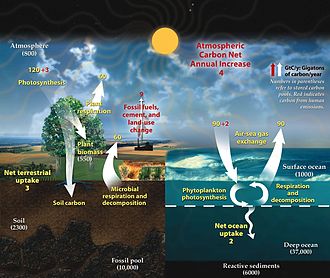
Greenhouse gases come from both nature and human activities. Nature has always had a balance, with plants taking in CO2 and volcanoes releasing it. But humans have added a lot more gases, especially from burning fossil fuels for cars, factories, and electricity. We also add gases through farming and cutting down forests.
If we keep adding gases at the current speed, Earth could get more than 2°C (3.6°F) warmer between 2040 and 2070. Scientists say this level of warming would be "dangerous" for our planet. That's why many smart people are working on ways to reduce these gases and even remove them from the air.
Why does this matter?
- The amount of greenhouse gases affects how warm or cold our planet is, which changes the weather where you live.
- Too many greenhouse gases can lead to bigger storms, rising sea levels, and changes in where certain plants and animals can live.
- Understanding these gases helps us figure out how to keep our Earth healthy for everyone, including you and your friends, in the future.
Ask Baiku anything about this article
Ask a question and Baiku will answer in plain English 🙂