The one thing to know:
Dark matter is a mysterious, invisible 'stuff' in space that we can't see, but we know it's there because of how its gravity pulls on everything else.
TL;DR
- 1Dark matter is invisible and doesn't shine light, but we know it exists because of its strong gravitational pull on galaxies and stars.
- 2Scientists think dark matter makes up most of the universe's mass, much more than all the stars and planets we can see.
- 3We don't know what dark matter is made of yet, but scientists are looking for tiny particles or even tiny black holes.
Think of it like:
Imagine you're at a playground, and you see a swing set moving all by itself, even though no one is pushing it. You can't see anyone, but you know something must be making it move. Dark matter is like that invisible force or person making the swing set (galaxies) move in ways we can't explain with just the visible stuff.

Imagine there's a lot of invisible 'stuff' in space that we can't see or touch, but it's super important! This mysterious stuff is called . It doesn't shine any light, and it doesn't bounce light back to us, so it's completely invisible. Scientists believe it's out there because of how its strong pulls on everything we can see, like stars and galaxies. It's like a secret helper that holds the universe together.
Think of it this way: when scientists look at how galaxies spin, they spin so fast that they should fly apart, like a spinning top that's going too quickly. But they don't! This means there must be extra, unseen gravity holding them together. That extra gravity comes from dark matter. It's also involved in how big groups of galaxies, called , stick together and how light bends around them, which is called .
Scientists think that only a tiny part of the universe is made of the normal stuff we see every day, like you, me, stars, and planets. A much bigger part, about 26.8%, is dark matter! There's also something called , which is even more mysterious and makes the universe expand faster. Together, dark matter and dark energy make up most of the universe. Even though dark matter is everywhere, it's spread out, so there isn't much of it right here in our solar system.
People have been wondering about invisible matter for a long time! Back in 1884, a scientist named Lord Kelvin thought there might be many 'dark bodies' (like invisible stars) around our Sun. Later, in 1906, a French scientist named Henri Poincaré even used the term 'dark matter' when talking about Kelvin's ideas.
Then, in the 1930s, a Swiss scientist named looked at how galaxies moved inside a huge galaxy cluster. He noticed they were moving so fast that the cluster should have flown apart! He figured there had to be a lot more invisible mass, or 'dunkle Materie' (German for dark matter), holding it all together. He was one of the first to really show that dark matter was probably out there, even though his first guesses about how much there was were a bit off.
“Many of our supposed thousand million stars — perhaps a great majority of them — may be dark bodies.”
In the 1970s, more scientists started to seriously think about dark matter. A famous astronomer named and her team carefully measured how fast stars spun around the centers of spiral galaxies. They found that stars far away from the center were spinning just as fast as stars closer in. This was very strange because if all the visible stuff was all there was, the outer stars should have been spinning much slower, like planets further from the Sun.
This observation was a big clue! It meant that there must be a huge, invisible 'halo' of dark matter surrounding galaxies, pulling on the outer stars and making them spin faster than expected. This idea became very important in astronomy, and it showed that dark matter wasn't just a weird idea, but something we needed to understand to explain how galaxies work.
“The galaxy rotation curve remains flat or even increases as distance from the center increases.”
Since the 1980s, even more evidence has piled up! Scientists have used different ways to 'see' the effects of dark matter. For example, they've used gravitational lensing, where the gravity of huge galaxy clusters bends light from even more distant objects, creating strange, stretched images. By studying these bent images, they can figure out how much invisible mass is in the cluster.
Another big piece of evidence came from something called the . This is where two galaxy clusters crashed into each other. Scientists saw that the normal, gassy matter (which glows in X-rays) got slowed down by the crash, but the invisible dark matter passed right through, like ghosts! This showed that dark matter doesn't bump into itself or normal matter very much, except through gravity.
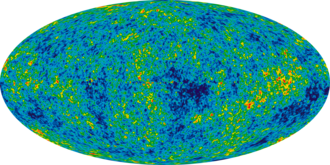
Scientists also look at the , which is like a leftover glow from the Big Bang. Tiny patterns in this glow tell us a lot about what the early universe was made of, and these patterns strongly suggest that dark matter was there, helping to form the first big structures in space.
So, what is dark matter made of? That's the biggest mystery! Scientists have lots of ideas. One popular idea is that it's made of tiny, invisible particles that we haven't discovered yet. These are sometimes called (Weakly Interacting Massive Particles) or . These particles would be very hard to find because they don't interact with light or normal matter very much, only through gravity and maybe a super-weak force.
Another idea is that dark matter could be made of tiny . These would be black holes that formed right after the Big Bang, much smaller than the ones that come from dying stars. Scientists are using special telescopes and experiments to try and catch these elusive particles or find signs of these tiny black holes. It's like a giant cosmic scavenger hunt!
Some scientists wonder if maybe our understanding of gravity is a little bit wrong on super-big scales. They think that if we change the rules of gravity a tiny bit, we might not need dark matter to explain everything. This is called . However, it's very hard to change the rules of gravity in a way that explains all the different clues we have about dark matter, like how galaxies spin, how light bends, and how galaxy clusters behave.
Most scientists still think that dark matter is real and that it's probably made of some new kind of particle. The search for this invisible stuff is one of the most exciting adventures in science today!
Why does this matter?
- Understanding dark matter helps us know what most of the universe is made of, which is a huge part of the cosmic puzzle!
- Dark matter is like the invisible glue holding galaxies and galaxy clusters together, so it affects how stars and planets (like ours!) form and move.
- Learning about dark matter could lead to discovering brand new particles and forces, changing what we know about how the universe works.
Ask Baiku anything about this article
Ask a question and Baiku will answer in plain English 🙂