The one thing to know:
Programming languages are special instructions we give to computers so they know exactly what to do, like talking to a very smart robot!
TL;DR
- 1Programming languages are like secret codes that tell computers what tasks to perform.
- 2There are many different kinds of programming languages, some old and some new, each with its own special uses.
- 3Computers need very clear instructions, so programming languages are super precise, unlike how we talk to each other.
Think of it like:
Think of it like giving instructions to a chef to bake a cake. You need to tell them exactly what ingredients to use, how much of each, and what steps to follow, in the right order. If you miss a step or use the wrong ingredient, the cake won't turn out right! A programming language is like that recipe for a computer.
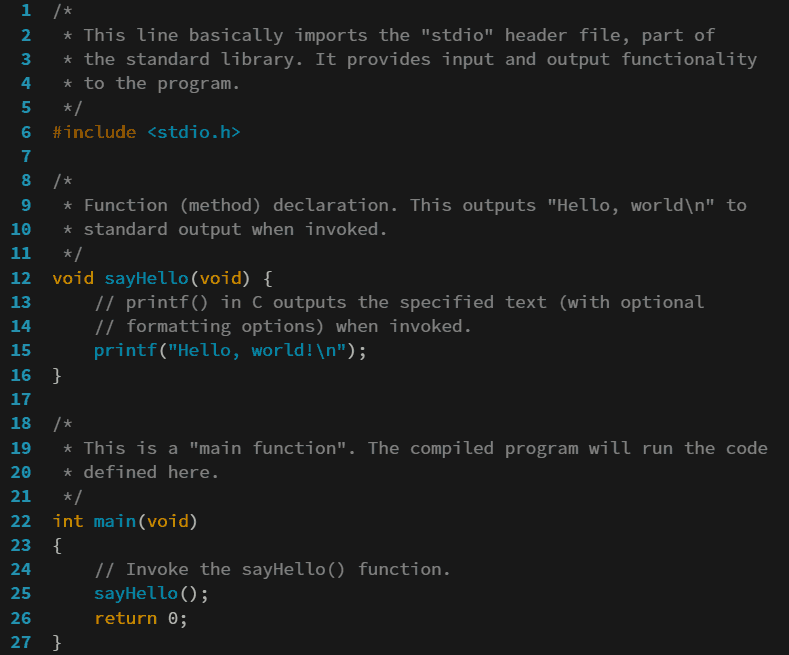
Have you ever wondered how your favorite video games work, or how apps on a tablet know what to do? It's all thanks to something called a . A programming language is a special way for humans to talk to computers. It's like a secret code that tells the computer exactly what steps to take to make something happen. These codes help us create all the amazing software we use every day, from drawing programs to websites.
When you write a program, it needs to be turned into something the computer can understand. There are two main ways this happens: and . Imagine you're writing a story in a secret language. With compilation, you write the whole story first, then a special translator (the compiler) turns the entire story into a language the computer understands all at once. Then, the computer can read and follow the whole story very quickly.
With interpretation, the translator (the interpreter) reads your story one sentence at a time and tells the computer what to do for each sentence, right then and there. This can be a bit slower because the computer has to wait for each sentence to be translated. Sometimes, they even mix these two ways, like with "just-in-time compilation," which tries to get the best of both worlds!
Long, long ago, the very first computers were programmed using a language called . This was super tricky because it was just simple numbers and codes that the computer's brain (the ) could understand directly. It was like talking to the computer in its own alien language! It was hard to find mistakes and even harder to use the same code on different computers.
Then, people invented . These were a little easier because they used short words instead of just numbers, making it a bit more human-friendly. But still, it was very close to how the computer worked inside. As computers got better, people wanted an even easier way to program. So, they created . These languages let you write instructions in a way that's much closer to how humans think and talk, like writing math problems with symbols you recognize. This made programming much faster and easier for everyone!
“High-level programming languages let you write instructions in a way that's much closer to how humans think and talk, like writing math problems with symbols you recognize.”
Over the years, many different programming languages have been invented. In the 1950s, languages like Fortran were made for science and math. In the 1960s and 70s, as computers became a little more common, languages like Lisp and ALGOL came along. ALGOL was super important because it influenced many popular languages we still use today, like C, C++, and Java! C is a very powerful language that lets you get really close to how the computer works, which is great for making fast programs.
Later, in the 1980s and 90s, personal computers became popular, and the internet started to grow. This led to new languages like Python, JavaScript, and PHP, which are great for making websites and quick programs. Today, new languages like Rust and Swift are being made to help create even faster and safer software for all sorts of new technologies.
“ALGOL was super important because it influenced many popular languages we still use today, like C, C++, and Java!”
Every programming language has its own rules, just like English has grammar rules. These rules are called . Syntax tells you how to arrange words, numbers, and symbols so the computer can understand them. If you make a mistake in syntax, it's like writing a sentence that doesn't make sense, and the computer won't know what to do!
But it's not just about the rules of how you write it; it's also about what those words and symbols actually mean. This is called . Even if your code follows all the syntax rules, it might not make sense or do what you want it to do. For example, you can say "Colorless green ideas sleep furiously" – it follows English grammar (syntax), but it doesn't really mean anything (semantics)!
When we talk about programming languages, we also talk about . Data types are like different kinds of information a computer can handle. For example, a number is a data type, and text (like your name) is another data type. Some languages are very strict about keeping different types of data separate, which helps prevent mistakes. This is called "strong typing."
Other languages are more relaxed and let you mix different types of data more easily. This can be convenient but might also lead to unexpected errors. Modern languages also have cool features like , which helps programs deal with problems gracefully instead of just crashing, and , which lets programs do many things at the same time, like playing music while you type!
There are thousands of programming languages out there! Some are very popular, like Python, C++, and Java, which are used for all sorts of things. Others are very specialized, used only for certain jobs, like COBOL for big business systems or Fortran for science. People measure how popular a language is in different ways, like how many jobs ask for it or how many books are written about it.
Sometimes, a language might have different versions or "dialects," like different accents in a spoken language. This happens when people make small changes or additions to a language. Even though there are so many languages, they all help us do amazing things with computers, making our lives easier and more fun!
Why does this matter?
- Learning about programming languages helps you understand how all the technology around you works, from your phone to smart home devices.
- Knowing a programming language can help you create your own games, apps, or websites, letting you bring your ideas to life.
- Understanding how computers think can help you solve problems in a logical way, which is a useful skill in many parts of life, not just coding!
Ask Baiku anything about this article
Ask a question and Baiku will answer in plain English 🙂


