The one thing to know:
Osmosis is how water moves all by itself through a special door to balance out sugary or salty stuff on both sides.
TL;DR
- 1Osmosis is when water moves through a special membrane from where there's lots of water to where there's less water (more dissolved stuff).
- 2This movement helps cells in our bodies and plants stay healthy by balancing water inside and out.
- 3Scientists can use osmosis for cool things like cleaning salty ocean water to make it drinkable.
Think of it like:
Think of it like a crowded playground (lots of water molecules) next to an empty playground (fewer water molecules because there are swings and slides taking up space, which are like dissolved stuff). There's a fence between them (the special membrane), but only the kids (water molecules) can squeeze through. Naturally, kids will move from the crowded side to the empty side until both playgrounds feel equally crowded.
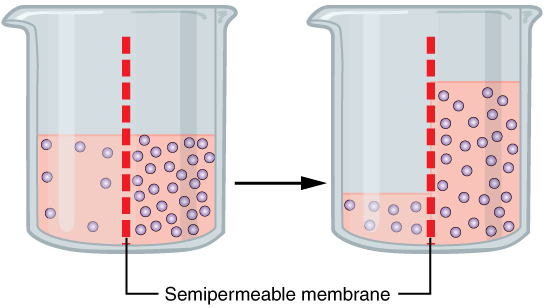
Key idea: Osmosis is the natural movement of water through a special filter to balance out dissolved stuff on both sides.
Have you ever wondered how plants drink water or how your body's cells stay plump and happy? It's all thanks to a super cool process called ! Osmosis is like a secret superpower that water has. It's when water molecules decide to move all by themselves through a special kind of filter, called a . This membrane is like a tiny fence with very specific holes: it lets water through, but not bigger things like sugar or salt.
Water always wants to go from a place where there's lots of water (and not much other stuff dissolved in it) to a place where there's less water (because there's more sugary or salty stuff mixed in). It's like water is trying to make everything fair and balanced on both sides of the fence!
A Little Bit of History
Key idea: People have known about water moving like this for a long time, and scientists helped us understand it better over the years.
People have noticed things like osmosis for a very long time, even when building the Egyptian pyramids! But a smart person named Jean-Antoine Nollet was the first to write down what he saw about osmosis in 1748. The word "osmosis" comes from old Greek words that mean "within," "outer," and "push." It's like water is pushing its way around!
Later, in 1867, Moritz Traube made even better special filters that helped scientists study how water moves. This helped us understand osmosis much better.
“The word "osmosis" comes from old Greek words that mean "within," "outer," and "push."”
How It Works: Water on the Move
Key idea: Water moves into or out of cells depending on how much dissolved stuff is inside compared to outside.
Imagine you have a cell, which is like a tiny water balloon. If you put this cell in a glass of pure water (which has very little dissolved stuff), the water from outside will rush into the cell. This makes the cell swell up, like a balloon getting bigger! This is because the cell has more dissolved stuff inside it than the pure water outside, so water moves in to try and balance it.
But what if you put that same cell in really salty water? Then, the water inside the cell will rush out into the salty water. This makes the cell shrink and get wrinkly, because the salty water outside has much more dissolved stuff, pulling the water out of the cell.
A fun way to see this is with a potato! If you put a slice of potato in super salty water, the water inside the potato will leave, and the potato slice will get soft and shrink. The more salt you add, the more water leaves the potato!
“If a cell is submerged in freshwater, water molecules move into the cell.”
Why Osmosis Matters to Living Things
Key idea: Osmosis is vital for plants to stand tall and for all living cells, including ours, to maintain the correct water balance.
Osmosis is super important for all living things! For example, plants use osmosis to stand up tall and strong. When a plant's cells are full of water, they push against their cell walls, making the plant firm. This is called . If a plant doesn't get enough water, its cells lose water, and the plant wilts.
Our own bodies also rely on osmosis. It helps make sure our cells have the right amount of water. If our cells get too much water, they can swell up, and if they lose too much, they can shrivel. Both are bad for us! Osmosis helps keep this balance just right.
Sometimes, osmosis can be dangerous. If you put a freshwater fish in saltwater, it will get very sick and die because all the water will leave its body. The same happens if you put a saltwater fish in freshwater – its cells will take in too much water and burst!
Water Movement in Different Environments
Cool Ways We Use Osmosis
Key idea: We can use osmosis in special ways, like reverse osmosis to make ocean water drinkable or forward osmosis for new cleaning methods.
One cool thing we can do with osmosis is called . Imagine you have really salty ocean water, and you want to drink it. Normally, water would move from pure water to salty water. But with reverse osmosis, we use a lot of pressure to force the water to go the other way!
We push the salty water through a special membrane that only lets pure water through, leaving the salt behind. This is how we can turn ocean water into fresh, drinkable water. It's like pushing water uphill, against its natural flow, to get what we need.
There's also something called . This is a newer idea where we use a special "draw" solution that's even saltier than the water we want to clean. This super salty solution pulls water out of the dirty water, and then we can easily separate the clean water from the draw solution. Scientists are still working on making this even better for cleaning water and even making energy!
“Reverse osmosis is known primarily for its role in turning seawater into drinking water.”
The Future of Osmosis
Key idea: Future uses of osmosis include better water cleaning, making electricity, and smart ways to deliver medicine.
Scientists are always finding new ways to use osmosis! They are trying to make even better membranes for cleaning water, so we can have more fresh water for everyone. They are also looking into using the power of osmosis to create electricity. Imagine using the difference between salty ocean water and fresh river water to make energy!
Osmosis is also helping in medicine. Doctors are exploring how to use osmosis to deliver medicines very precisely inside our bodies. This means medicine could go exactly where it's needed, making treatments better. The future of osmosis is full of exciting possibilities for our world.
Potential Future Uses of Osmosis
Why does this matter?
- It helps you understand how your body and plants stay hydrated and healthy, and why drinking too much plain water too fast can be dangerous.
- It explains how we can turn salty ocean water into fresh drinking water, which is super important for places that don't have much fresh water.
- It's a basic science idea that helps us understand many other cool things in biology and even new ways to make energy!
Ask Baiku anything about this article
Ask a question and Baiku will answer in plain English 🙂
Test yourself
1 / 3What is the main thing that moves during osmosis?
Keep exploring

Cell membrane
Biological membrane that separates the interior of a cell from its outside environment

Diffusion
Transport of dissolved species from the highest to the lowest concentration region
Water potential
Potential energy of water per unit volume relative to water in known conditions

Desalination
Removal of salts from water