The one thing to know:
Oceanography is the scientific study of everything about the ocean, from its tiny creatures to its giant currents and deep seafloor.
TL;DR
- 1Oceanography is the science of studying the ocean, including its water, living things, rocks, and how it moves.
- 2People have explored the ocean for a very long time, but modern oceanography really took off with big scientific trips like the Challenger expedition.
- 3Understanding the ocean helps us take care of our planet, especially with big changes like global warming.
Think of it like:
Think of oceanography like being a super detective for the ocean. You look at clues like water temperature, tiny sea creatures, and underwater mountains to figure out all its secrets, just like a detective solves a mystery!
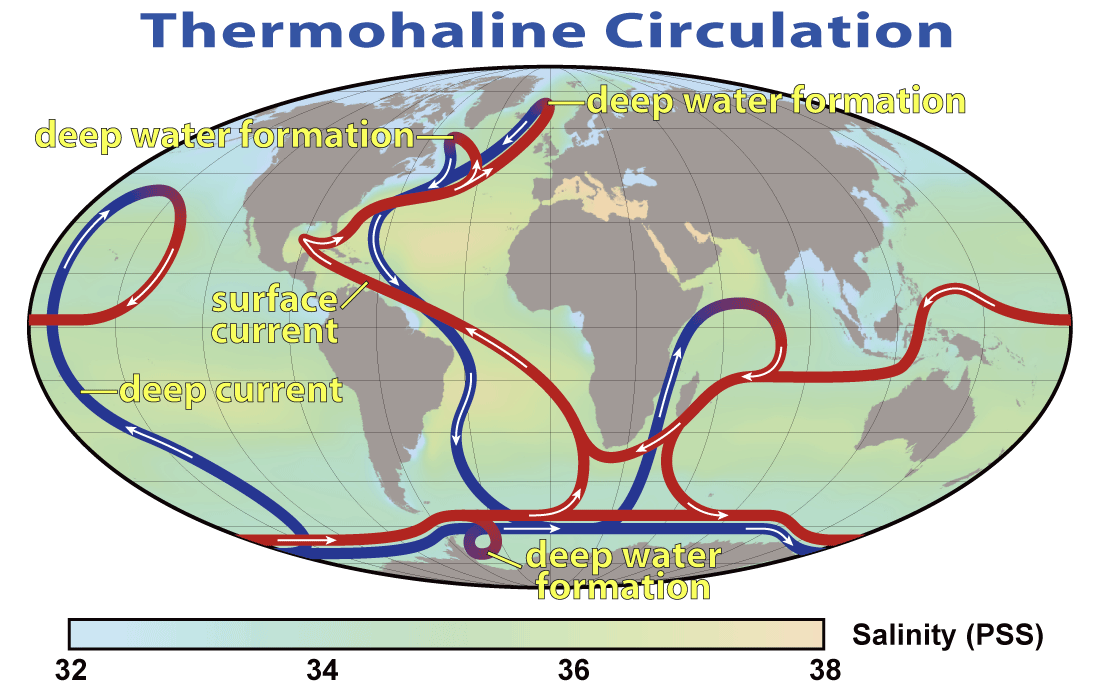
Have you ever wondered what's hidden deep in the ocean, or why the waves crash on the shore? Well, there's a special science called that studies all of that! It's like a big puzzle where scientists try to understand everything about the ocean. This includes its water, the living things in it, the rocks at the bottom, and how it moves. Oceanography is a type of , which means it helps us learn about our planet.
Oceanographers use ideas from many other sciences, like biology (the study of living things), chemistry (the study of what things are made of), and geology (the study of rocks and Earth's structure). They look at things like (like rivers in the sea), waves, and even how the Earth's plates move under the ocean floor.
People have been learning about the ocean for a very, very long time. Even ancient thinkers like Aristotle wrote about the ocean's (the rising and falling of the water). Early explorers mostly sailed on the surface to make maps and catch fish. They also tried to measure how deep the ocean was with ropes.
A long time ago, Portuguese sailors started a big project to understand the Atlantic Ocean's currents and winds. They weren't just guessing; they used special tools and math to plan their trips. This helped them find new routes, like sailing around Africa to India. They even discovered the best way to sail back home, which was a big loop out into the open ocean!
Later, in the 1700s, some special trips were made just for science. One of the first was a Danish trip with scientists who wanted to study sea life. Benjamin Franklin, a very smart American, was the first to really study and name the , a powerful ocean current, and even mapped it out!
“They weren't just guessing; they used special tools and math to plan their trips.”
For a long time, people only knew about the top part of the ocean and some shallow areas. The super deep parts were a big mystery! But in the mid-1800s, people started getting really curious about these unknown depths.
A super important event was the from 1872 to 1876. This was the first real scientific trip around the world just to study the ocean! The ship, HMS Challenger, was turned into a floating lab. Scientists on board traveled almost 70,000 miles, taking measurements, collecting samples, and discovering almost 5,000 new kinds of sea creatures!
This amazing trip helped start modern oceanography as a real science. One of the scientists, John Murray, even started the first oceanography school. He was the first to study deep ocean trenches and map underwater mountains.
After the Challenger expedition, many other countries and scientists started their own ocean explorations. They built special ships just for ocean research. One cool example is Fridtjof Nansen, who let his ship get stuck in Arctic ice on purpose to study the ocean there for a long time!
In the 1900s, new technologies helped scientists learn even more. They started using sound to measure how deep the ocean was. This helped them map huge underwater mountain ranges, like the Mid-Atlantic Ridge.
Important books were written, and smart scientists like Easter Ellen Cupp, one of the first women to get a PhD in oceanography, made big discoveries about tiny ocean plants. Also, new ideas like helped us understand how the Earth's crust moves under the ocean.
“After the Challenger expedition, many other countries and scientists started their own ocean explorations.”
Today, oceanography is super important because it helps us understand big changes happening on Earth. The ocean and the air are connected, like two puzzle pieces. What happens in one affects the other.
Scientists are studying things like (when the ocean gets more acidic), how much heat the ocean is soaking up, and how sea levels are rising. These studies help us understand and how to protect our planet.
Learning more about the ocean helps us take better care of it and use its resources wisely. Many countries spend money on ocean science to understand these important issues.
Oceanography is a big field, so it's split into different branches, like different departments in a school:
looks at all the living things in the ocean, from tiny germs to giant whales, and how they live in their ocean home.
studies what the ocean water is made of, like its saltiness and other chemicals. They also study how things like carbon dioxide from the air get into the ocean and change it.
explores the ocean floor, looking at rocks, volcanoes, and how the continents have moved over millions of years.
studies how the ocean moves and its physical properties, like temperature, waves, and currents. They want to know why the ocean moves the way it does.
is like being a detective for the ancient ocean. Scientists look at clues from the past to understand how the ocean used to be, which helps us guess what might happen in the future.
Why does this matter?
- The ocean helps control our planet's weather and climate, so understanding it helps us predict storms and prepare for changes.
- Many animals and plants live in the ocean, and studying it helps us protect these creatures and their homes.
- The ocean provides us with food, medicines, and even oxygen to breathe, so learning about it helps us use these resources responsibly.
Ask Baiku anything about this article
Ask a question and Baiku will answer in plain English 🙂


