The one thing to know:
The brain is the central control organ for almost all animals, processing information and directing body functions.
- 1The brain is the main control center of the nervous system, found in the head of most animals.
- 2It processes sensory information, controls movement, and handles complex thoughts, learning, and memory.
- 3Brains vary greatly in size and complexity across species, but all vertebrate brains share a basic structure that develops from three main parts.
Tap a part to jump there
Part 1 of 8Think of it like:
Think of your brain like the main computer in a highly advanced factory. It receives information from all the sensors (your senses), processes it, makes decisions, and sends commands to all the machines (your body parts) to keep everything running smoothly and efficiently.
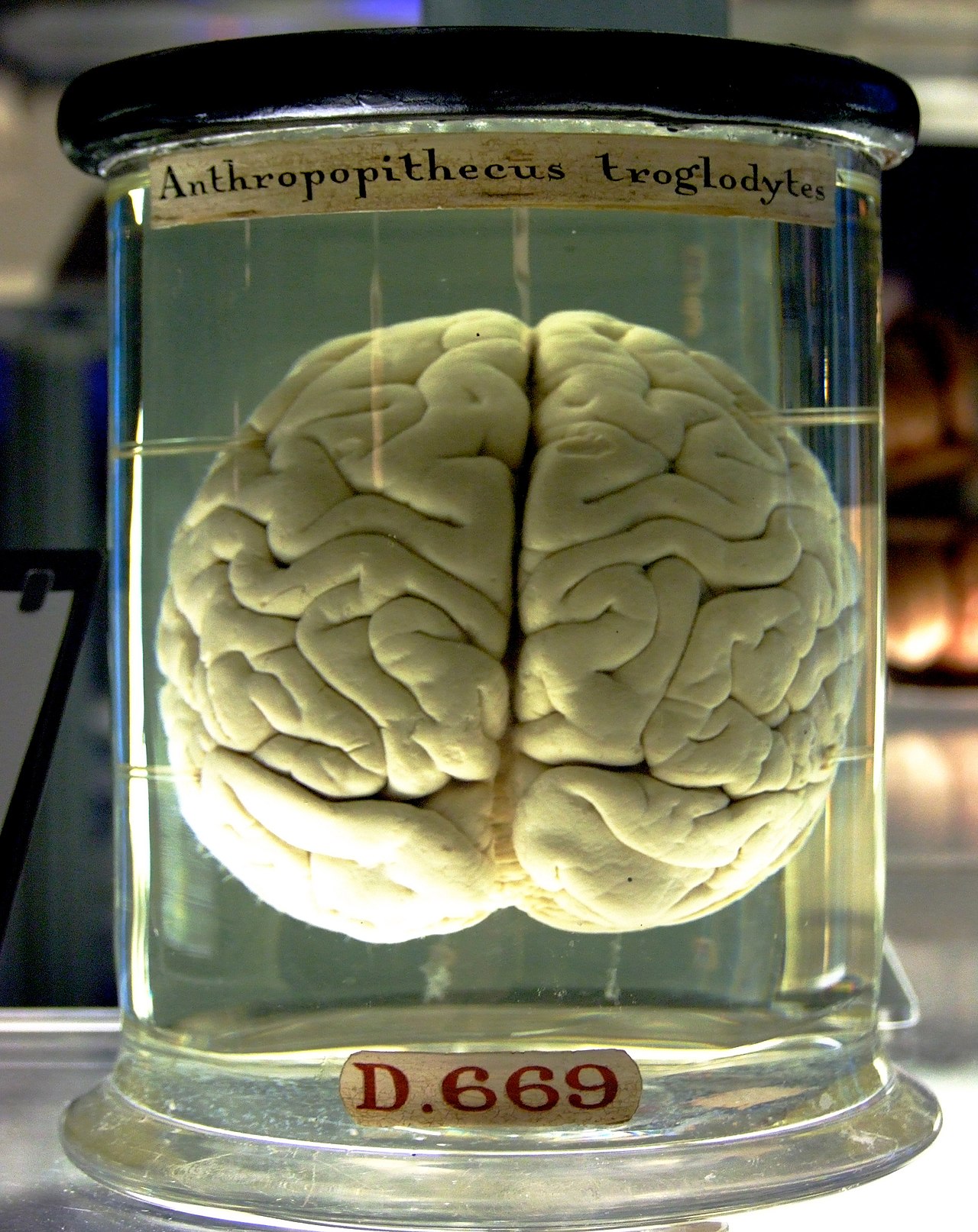
Key idea: The brain is the central organ that processes information and controls the body's actions and thoughts.
The is an amazing organ that acts as the central control unit for your entire body. It is part of your , which is like a vast communication network. Most animals, from tiny insects to humans, have a brain. It is usually located in the head, close to important senses like sight, hearing, and smell. The brain's main jobs are to take in information from your senses, make sense of it (this includes thinking, understanding, and being intelligent), and then tell your body what to do, like moving your muscles or releasing hormones.
Key idea: Vertebrate brains develop from three main parts and offer centralized control, unlike the simpler, segmented nervous systems of many invertebrates.
While all brains do similar things, their structure can be quite different depending on the animal. For example, the brains of animals without backbones (like insects) develop from small, paired bundles of nerves. Each bundle mostly controls its own body part. But in animals with backbones (like fish, birds, and humans), the brain grows from a single tube at the front of the spinal cord. This allows for more centralized control over the whole body.
All vertebrate brains start out in the embryo as three main parts: the forebrain, midbrain, and hindbrain. These parts then develop further into the complex structures we see in adult brains. The , which runs down your back, is like an extension of the brain. Together, the brain and spinal cord make up the .
“All vertebrate brains can be embryonically divided into three parts: the forebrain, midbrain, and hindbrain.”
Key idea: The brain is composed of billions of neurons and glial cells, with neurons communicating through electrical signals at synapses.
Your brain is made of special cells called and . Glial cells are like the support staff for neurons. They provide structure, nutrients, insulation, and help guide brain development. Neurons are the stars of the show; they are the cells that send and receive signals. In humans, the outer layer of the brain, called the , has about 14 to 16 billion neurons. The cerebellum, a part of the brain important for movement, has even more, around 55 to 70 billion neurons.
Each neuron connects to thousands of other neurons through tiny junctions called . Neurons communicate by sending quick electrical signals, called , along long fibers called axons. These signals travel very fast, from 1 to 100 meters per second, to other parts of the brain or body. The prefrontal cortex, a part of your brain that helps with planning and decision making, is especially well developed in humans.
Quick check
What are the two main types of cells in the brain and what is the primary role of neurons?
Key idea: The brain provides centralized control over the body, enabling coordinated responses and complex behaviors.
The brain controls your body by creating patterns of muscle activity and by releasing special chemicals called . This central control allows your body to react quickly and in a coordinated way to changes around you. Simple automatic responses, like reflexes, can be handled by the spinal cord. But for complex, purposeful actions that require thinking, the brain's ability to combine information is essential.
Scientists understand a lot about how individual brain cells work. However, how millions of them work together to create thoughts and actions is still a big mystery. Modern science often thinks of the brain like a biological computer. It is very different from a regular computer, but it also takes in information, stores it, and processes it in many ways.
“The operations of individual brain cells are now understood in considerable detail but the way they cooperate in ensembles of millions is yet to be solved.”
Quick check
What are the two main roles of the brain in controlling the body?
Key idea: Brain structure varies across species but follows common architectural principles, with grey matter and white matter being key visible components.
The brain's structure varies widely among different animals, making it hard to find common features. However, some basic design principles apply to many species. For example, some parts of the brain are common to almost all animals, while others are more developed in more advanced species or in vertebrates compared to invertebrates.
To study the brain, scientists can look at it directly. But brain tissue is very soft. So, they often harden it with chemicals and then slice it thinly to examine the inside. You would see darker areas called and lighter areas called . Grey matter is where many neuron cell bodies are, while white matter is mostly made of the long, insulated fibers (axons) that connect neurons. Scientists can also use special dyes to highlight different parts of the brain and examine its tiny structures under a microscope.
Key idea: Neurons communicate via synapses using neurotransmitters, and the ability of synapses to change is fundamental to learning and memory.
The brains of all species are mainly made of neurons and glial cells. Glial cells have many important jobs, including supporting neurons, helping with their metabolism, insulating them, and guiding their development. Neurons are usually seen as the most important cells because they send signals. Each neuron connects to thousands of others through synapses. These connections are crucial for the brain's function, as they are the points where communication happens.
When an electrical signal (action potential) reaches a synapse, it releases a chemical called a . This neurotransmitter then binds to other cells, changing their electrical or chemical properties. The human brain has an estimated 100 trillion synapses. These synapses are not fixed; they can change their strength based on how much they are used. Many scientists believe this ability to change is how the brain learns and remembers things.
Most of the brain's space is filled with axons, which are often bundled together into nerve fiber tracts. Many axons are wrapped in a fatty layer called , which is white and helps signals travel much faster. This is why parts of the brain with many myelinated axons appear as white matter, while areas with many neuron cell bodies appear as grey matter.
“Synapses are the key functional elements of the brain. The essential function of the brain is cell-to-cell communication, and synapses are the points at which communication occurs.”
Quick check
How do neurons communicate with each other?
Key idea: The brain integrates sensory information from various specialized cells to create our perception of the environment.
The brain allows us to experience the world around us. Your brain receives information about light, sound, smells, temperature, your body's position, and even the chemicals in your blood. Other animals have additional senses, like snakes that can sense heat or birds that can sense magnetic fields.
Each sense starts with specialized cells, like the light sensing cells in your eyes or the vibration sensing cells in your ears. These cells send signals to the spinal cord or brain. The brain then processes these signals, often sending them through a relay station called the , before they reach the cerebral cortex. Here, the information is analyzed and combined with signals from other senses to create your perception of the world.
Key idea: The brain's motor systems, working with the spinal cord, control all body movements from basic reflexes to precise voluntary actions.
Your brain is also in charge of all your body movements. Areas in the brain called motor systems initiate these movements. Most voluntary muscles are directly controlled by motor neurons in the spinal cord and hindbrain. The spinal cord itself can handle simple reflexes and rhythmic movements like walking. However, the brain provides more sophisticated control.
Different parts of the brain control different aspects of movement. For example, areas in the medulla and pons control basic movements like breathing. The midbrain helps coordinate arm and leg movements. The primary motor cortex, located at the back of the frontal lobe, allows for very precise control of fine movements. Other areas, like the and , also play important roles in refining and coordinating movements.
Why does this matter?
- Understanding the brain helps us treat neurological diseases like Alzheimer's or Parkinson's, and mental health conditions such as depression or anxiety.
- Learning about how the brain works can improve our own learning abilities, memory, and decision making in daily life.
- Research into the brain's functions helps us develop better artificial intelligence and understand consciousness itself.
Ask Baiku
Ask a question and Baiku will answer simply 🙂
⚡ Tap for an instant answer
Test yourself
Turn this into a learning journey
Go from this one topic to real understanding of The Brain: Your Body's Command Center, a step-by-step path you can track and finish.
Build my journey →